Do I need Hillside Building Committee approval for a pool in Paradise Valley?
If your lot has a natural slope of 10% or greater under the building pad, or sits within the Hillside Development Area mapped in Article XXII, yes — HBC approval is required before any building permit can be issued. Most new pools on PV hillside lots do trigger review. Flatter parcels along the Tatum corridor often fall below the threshold and follow a standard permit pathway. Verifying which side of the line your lot falls on is the first step. Full HBC permitting guide →
How long does it take to get a pool permit in Paradise Valley?
For a standalone hillside pool, expect 3 to 6 months from pre-application to ground-breaking. For pools tied to a new home build with Concept and Formal HBC Review, plan on 6 to 9 months. Any contractor quoting an 8-to-12-week build timeline on a hillside PV lot has not accounted for the HBC sequence.
Do you remodel or renovate existing pools in Paradise Valley?
Yes. Alongside new construction, we handle full pool remodels and renovations across Paradise Valley — modernizing dated shapes, replacing decking and coping, adding negative edges, spas, and outdoor living. Renovations kept within an existing footprint can streamline the HBC pathway when no new disturbed area is added. See our Paradise Valley pool remodeling work →
What is the LRV requirement for pool decks in Paradise Valley?
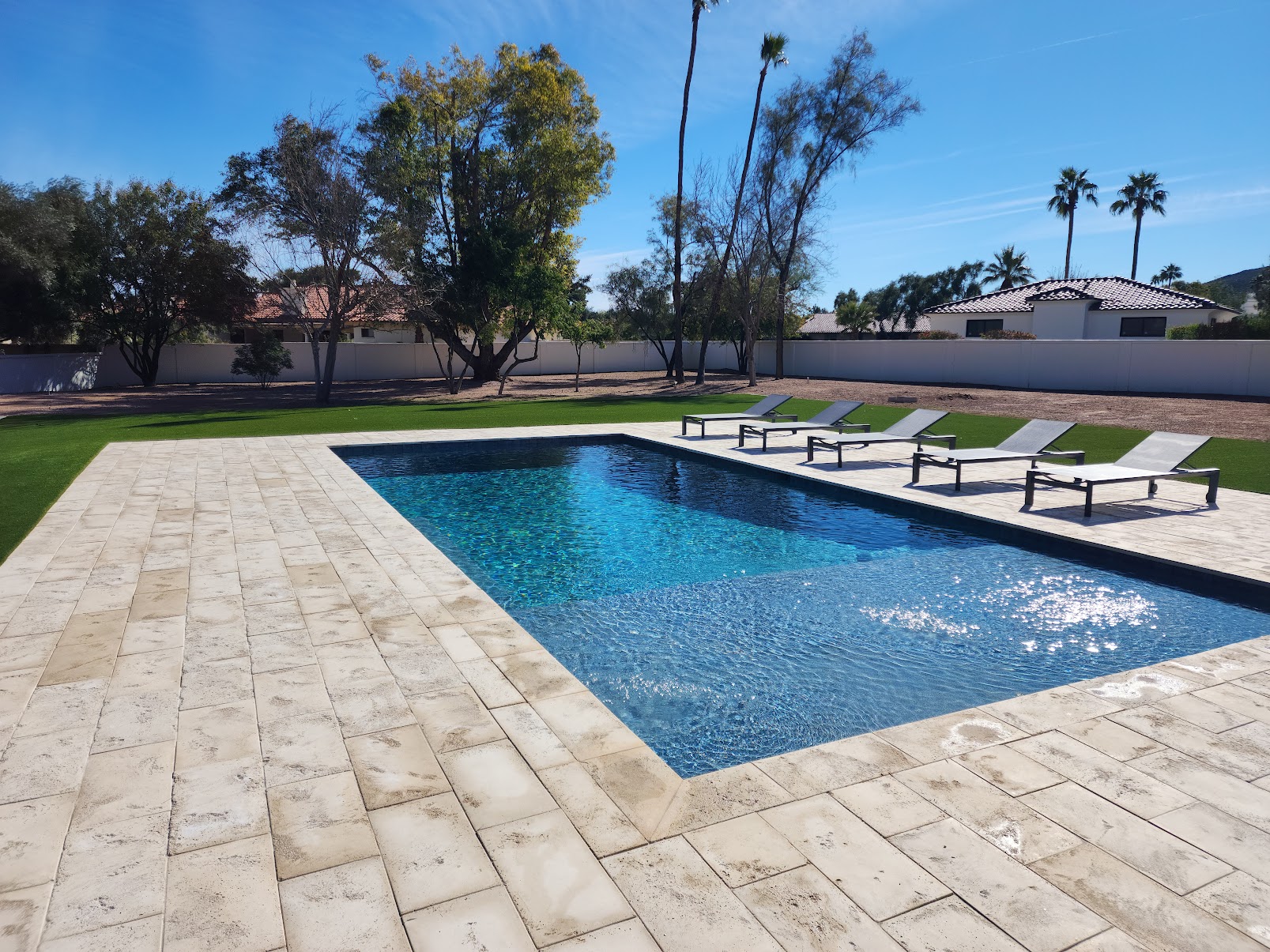
Paradise Valley enforces a maximum Light Reflectance Value (LRV) of 38 for all exterior surfaces — pool deck, coping, hardscape, view fencing, and visible material finishes. This is enforced strictly at HBC review and routinely catches buyers who specify lighter-toned travertine or limestone from other markets. ICP designs every PV material palette within the LRV requirement from day one — we don't redesign at the committee meeting.
What is the difference between a Combined HBC Review and a Formal HBC Review?
Combined HBC Review is the pathway for most standalone pool and spa additions on existing PV hillside homes — the full 5-member committee reviews and decides in a single public meeting. Formal Review is the more detailed pathway for new homes, major additions, and pools that are part of a full estate buildout. Formal Review requires a Concept Plan meeting first for early committee guidance, then a Formal meeting with the complete submittal package — site plan, grading and drainage with 100-year storm analysis, seismic refraction survey, 3D massing model, LRV-rated materials, lighting photometrics, and landscape salvage plan.
Can one contractor handle both the pool and the outdoor living in Paradise Valley?
Only if that contractor is dual-licensed. ICP holds both KA-5 (residential pool) and KB-2 (general residential) licenses, which means we self-perform pool, hardscape, retaining walls, outdoor kitchens, ramadas, fire features, and outdoor living under a single contract. Most pool builders hold only the pool license and must subcontract the rest.
How is a negative-edge or infinity-edge pool engineered on a Paradise Valley hillside?
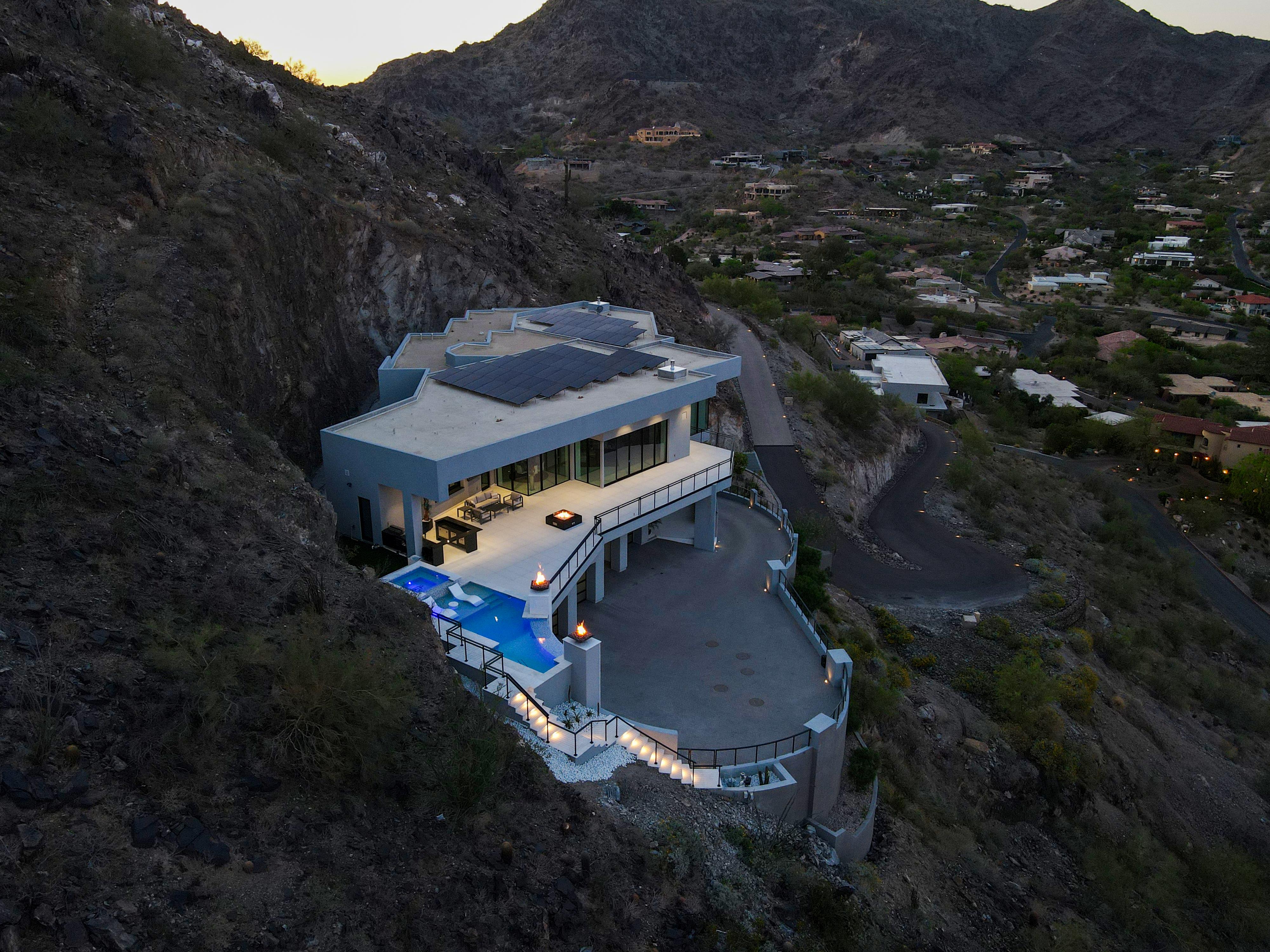
Negative-edge pools on PV hillside lots are classified as retaining walls under the Town's code, capped at the 8-foot maximum height. The engineering combines hydraulic design (catch basin sizing, return flow, edge precision) with structural design (steel reinforcement, shotcrete thickness, friction piles where the geotechnical report requires) to hold a perfect waterline as the structure ages. The Clear Water Estates project above used a double mat of steel and 12-inch wall thickness to deliver a 16-foot negative edge on bedrock. More on hillside engineering →
What does a custom pool cost in Paradise Valley?
Most ICP projects in Paradise Valley run $250,000 to $600,000 or more. The cost drivers are HBC submittal preparation, hillside structural engineering, LRV-compliant premium materials, and full backyard scope under the KB-2 license. Quotes significantly below this range typically reflect a stripped-down scope or a contractor who has not priced the actual PV permit pathway. See the full custom pool cost breakdown →
What makes Paradise Valley permitting different from Scottsdale?
Paradise Valley is an independent town with its own planning department, zoning code (Article XXII), and pre-permit design review body (the HBC). Scottsdale and Phoenix rely on staff-level permit review only — no equivalent committee, no LRV maximum, no 1,500-foot neighbor notification, no required financial assurance bond, no required Construction Staging Plan. A pool builder licensed in Scottsdale has not necessarily built in Paradise Valley.