Luxury Outdoor Living, Redefined

Your Guide to Building a Custom Pool in the Phoenix Valley

Transform your property with custom pools, outdoor living spaces, and full-scale remodels—engineered for luxury and built to last.

Custom Pools
Outdoor Living
Remodels
Full Property Builds
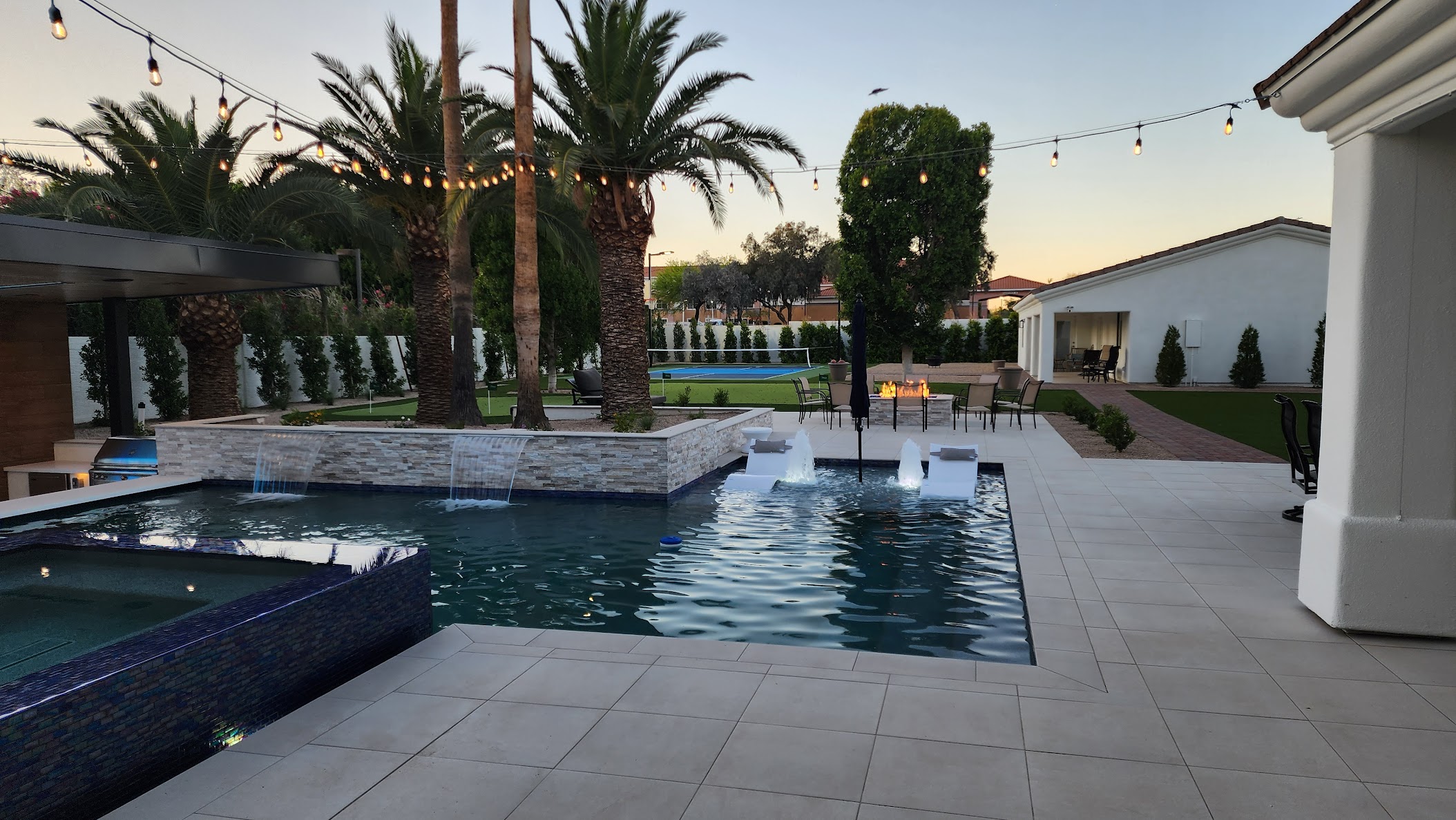
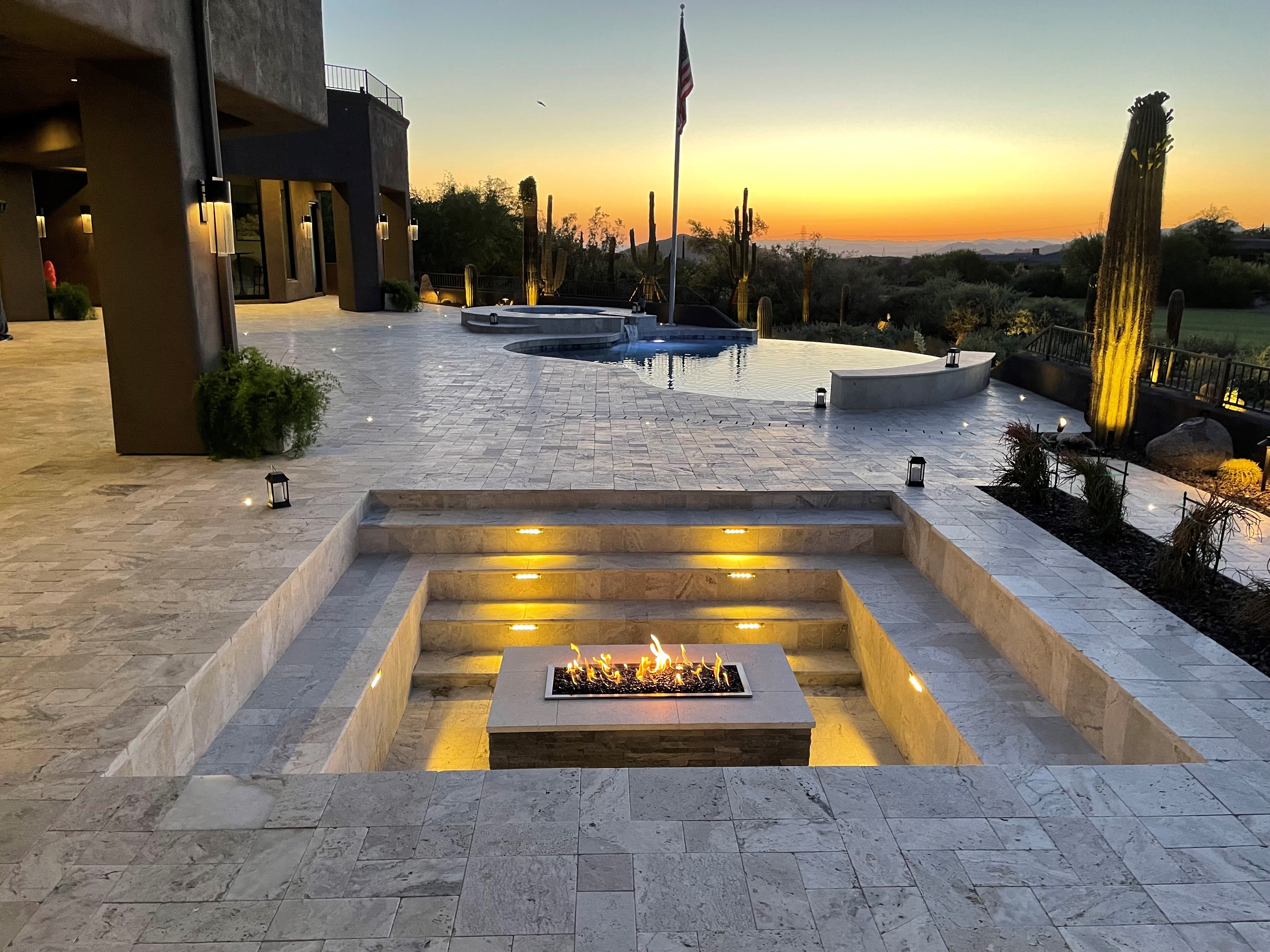
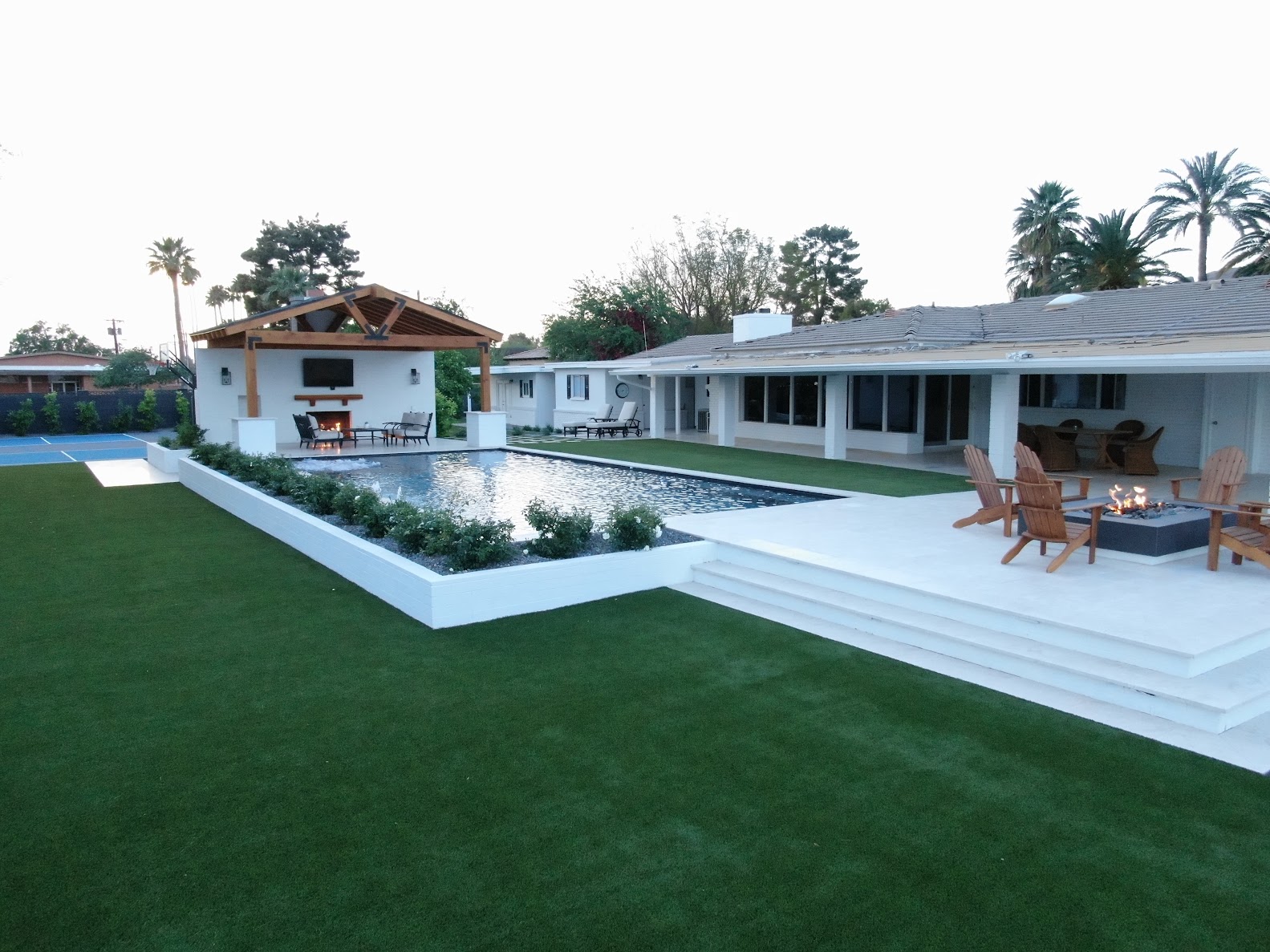
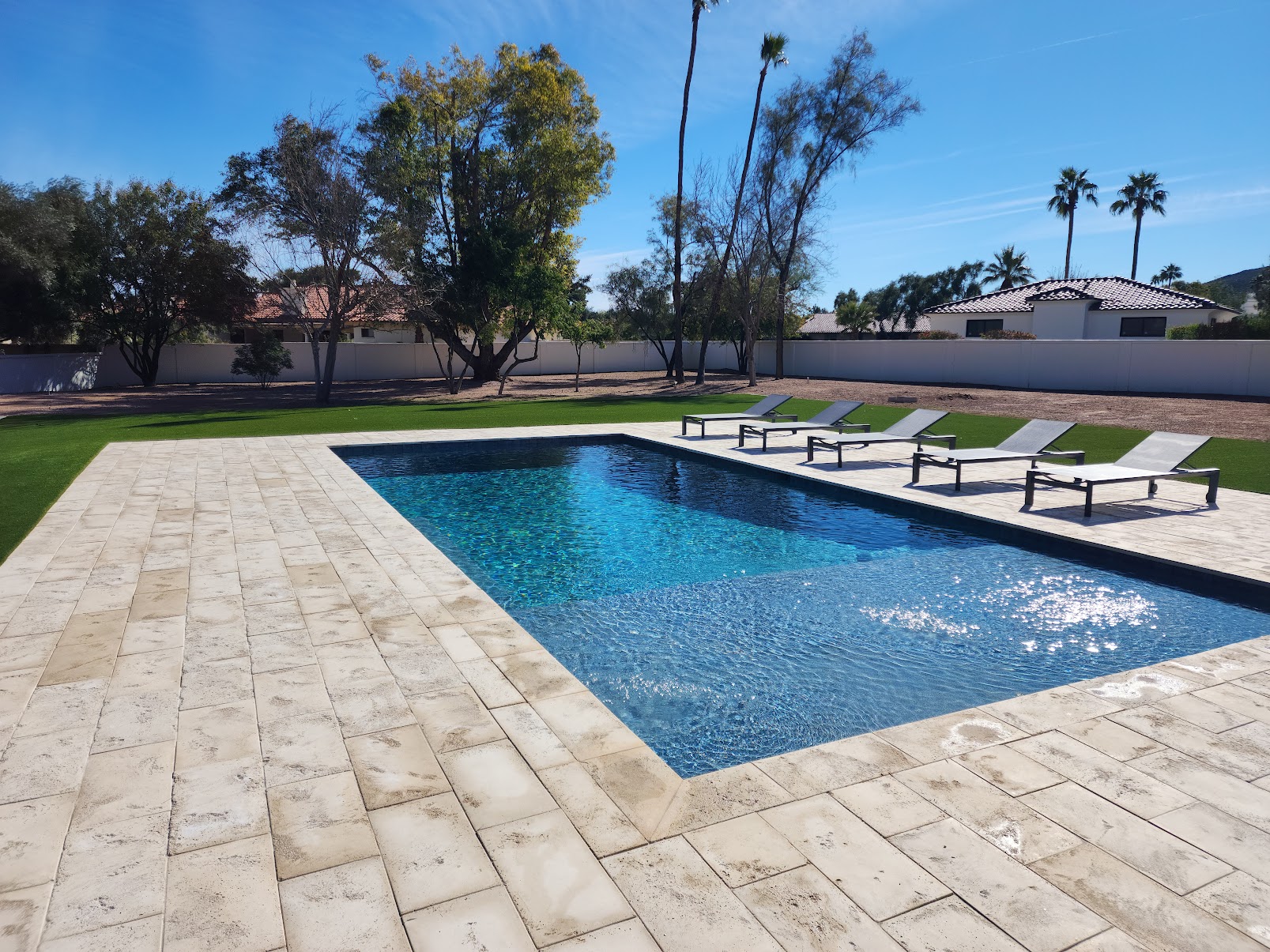
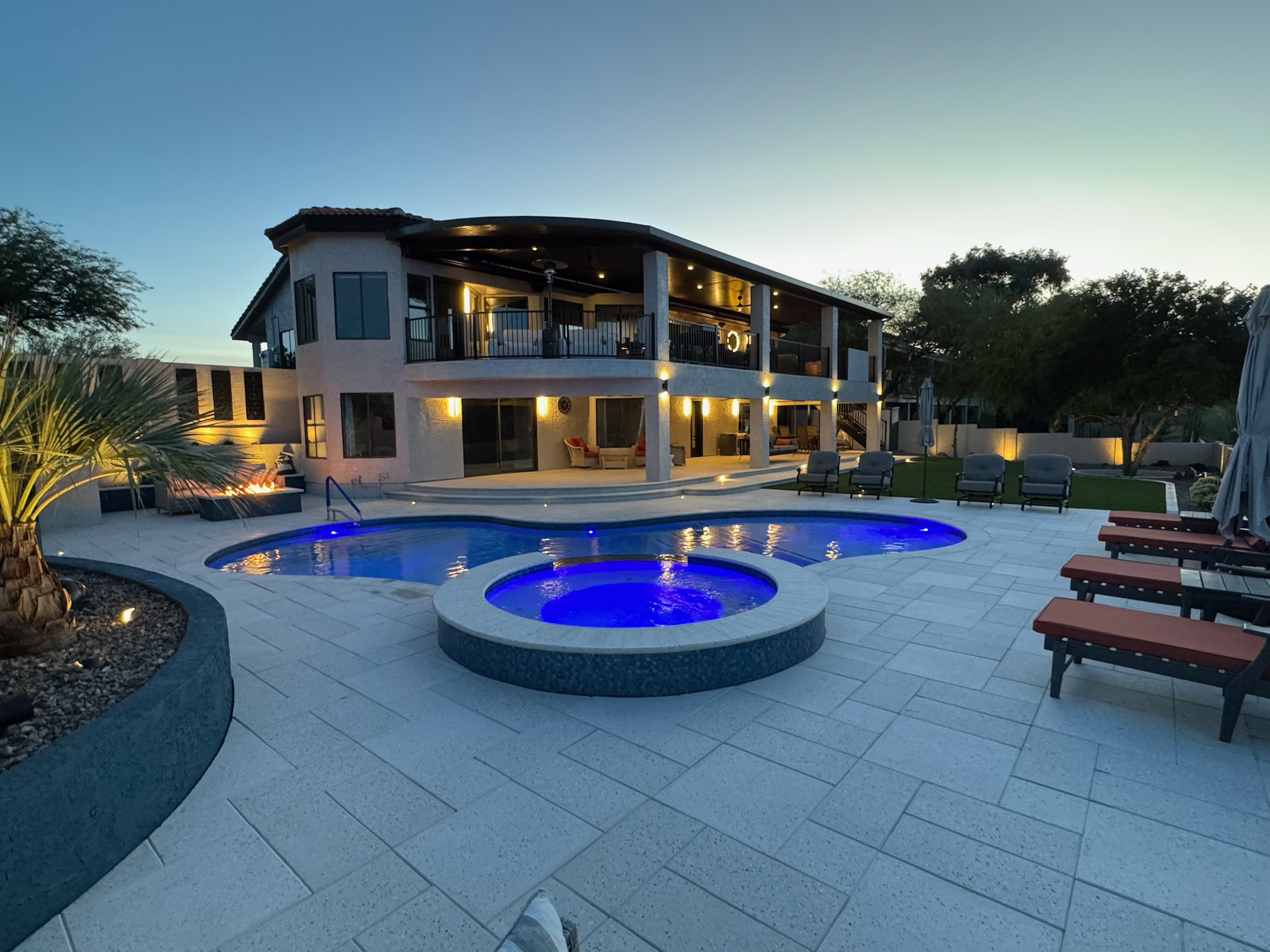
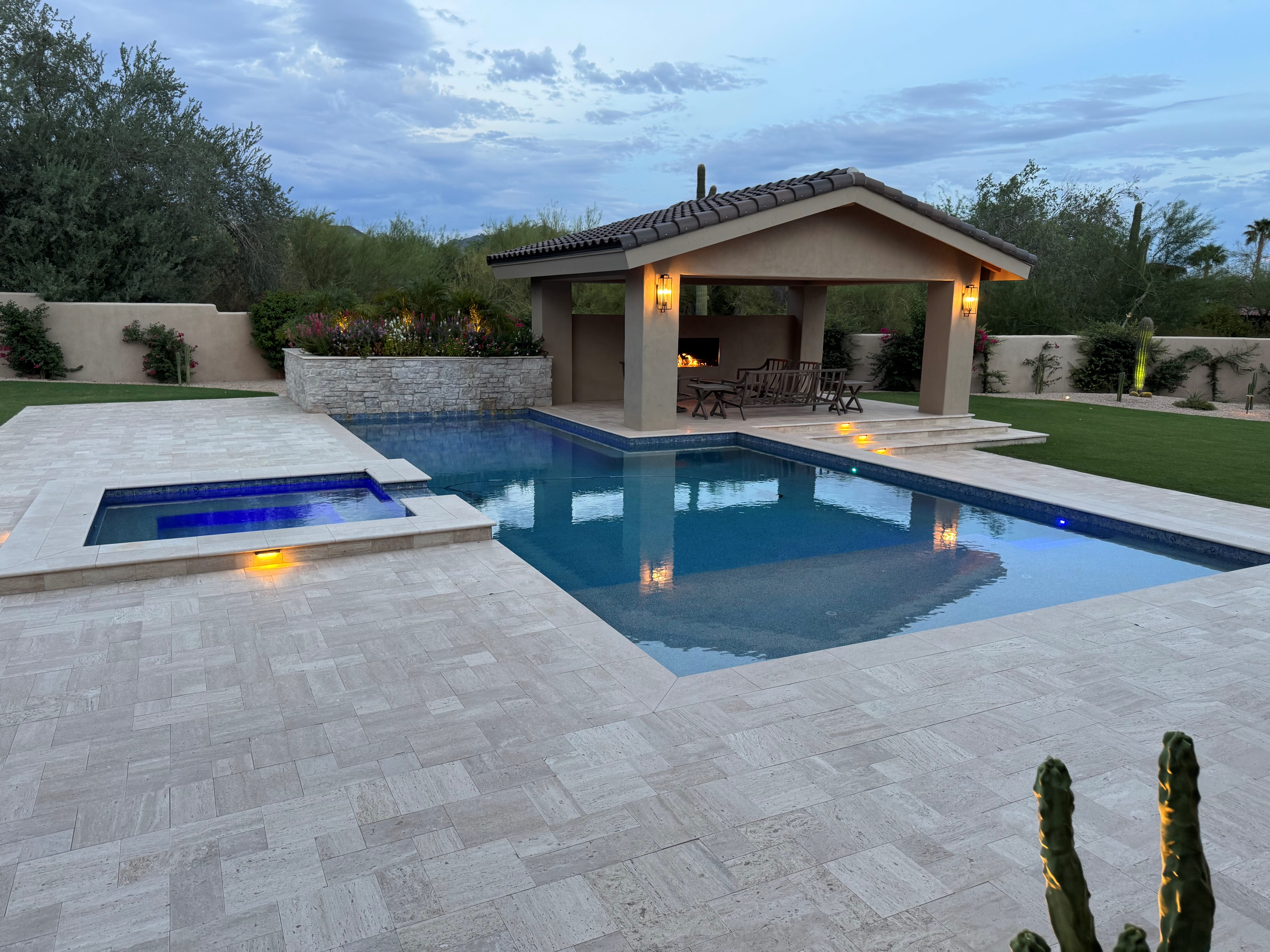
Custom luxury pool construction by Innovative Custom Pools in Phoenix Valley, Arizona

Building a custom pool in the Arizona desert presents a unique opportunity—transforming harsh, sun-baked landscapes into a private oasis that provides relief, recreation, and resort-style luxury right in your backyard.

If you've started calling around to pool contractors in Phoenix and everyone is promising a "simple 90-day build," you're not getting the full story about what it really takes to build a structurally sound pool in our soils, with our heat, and under current Arizona codes. In Phoenix, your pool isn't just a hole with plaster — it's a reinforced concrete structure sitting in caliche, expansive clay, and monsoon drainage paths that can either add hundreds of thousands in value or turn into a liability if the wrong builder cuts corners.

Thinking about building in Phoenix, Scottsdale, or Paradise Valley? Schedule a no-pressure planning call at (602) 806-8904 and we'll walk your lot, review your survey, and give you a straight answer on scope, budget, and timeline.

Why "Any Pool Builder" Won't Cut It in Phoenix

Most Phoenix-area homeowners don't realize there are critical differences between a pool builder that only has a swimming pool license and a firm that holds both a General Contractor (GC) and pool license.

Pool-only contractor vs GC + pool contractor

A typical pool-only contractor in Arizona is licensed to build the pool and maybe some limited hardscape, but not to legally manage structural work, retaining walls, room additions, or complex grading across the entire site. A dual-licensed contractor like Innovative Custom Pools (ROC #333187 & #247627) can engineer and build the whole environment — the shell, retaining walls, ramadas, casita, outdoor kitchen, drainage, utilities, and hardscape — under one license and one coordinated plan.

On a flat, basic tract-home lot in the West Valley, a pool-only contractor might be fine if you truly want "just a pool." But if your Phoenix, Scottsdale, or Paradise Valley property needs retaining walls, raised decks, hillside cuts, or a full outdoor living environment, hiring a pool-only outfit often means:

  • Multiple contractors tripping over each other and pointing fingers when something goes wrong
  • No single party responsible for drainage design across the whole yard
  • Structural elements (like retaining walls or sunken seating areas) value-engineered without proper calculations or inspection
Rebar steel cage for custom pool construction in Phoenix showing heavy-gauge reinforcement
Heavy-gauge rebar cage ready for shotcrete — this is what proper pool engineering looks like in Phoenix soils.

Real example: plumbing in the wrong place

One of the most common problems we're called in to fix is when a pool-only builder sets the pool and equipment, then later another contractor tries to add an outdoor kitchen, ramada, or fire feature. Gas and electric stubs weren't planned, slab grades don't work with the pool elevations, and suddenly you're paying to saw-cut new pavers and trench through your brand new yard.

When we design a project, we lay out the pool, kitchen, fire features, casita, and main drainage all at once so your plumbing, gas, and electrical runs are planned from day one — not retrofitted at triple the cost.

➡️ Scottsdale luxury pool and backyard planning guide

What Makes Phoenix Pool Construction Different

Choosing between pool contractors in Phoenix starts with understanding what they're really building into and around. Phoenix is not Florida, and it's not the Midwest; our soils, codes, and climate change everything.

Caliche, expansive clays, and why steel matters

In many Phoenix and North Phoenix areas, you'll hit caliche — a hard, cement-like layer — within 12–36 inches of excavation. Breaking through it takes heavier equipment and time, but once you're in that layer, it provides excellent bearing if your pool shell is properly engineered and reinforced.

We routinely specify:

  • Heavy-gauge rebar cages with tighter spacing on walls and floors than "minimum standard" plans
  • Extra steel at corners, deep ends, and around raised bond beams where soil and water pressure are highest
  • Shotcrete (wet-mix) application with high-PSI mixes, which gives better consistency and compaction in our climate than old-school dry gunite when it's installed by an experienced crew

In parts of the Valley with expansive clay — more common in the West Valley and pockets of the East Valley — we adjust footing depths and beam design so the pool shell isn't fighting swelling soils every monsoon. A volume builder who tells you "all our pools are built the same" is telling you they're not engineering for your lot; they're engineering for speed.

Monsoon drainage and your home's foundation

Every year, we see pools and decks that were built with no thought to how water moves across the property during a summer monsoon. In Phoenix and Scottsdale, it's not just about getting water away from the pool — it's about:

  • Keeping runoff from pushing against your home's foundation
  • Avoiding sheet flow toward your neighbor's yard, which can cause legal and drainage issues
  • Designing deck slopes, channel drains, and area drains that actually work when 1–2 inches of rain falls in an hour

A proper pool plan should include a grading and drainage strategy that ties into your existing roof runoff, site swales, and any existing drainage infrastructure — not just a note that says "slope away from house."

Aerial view of completed luxury custom pool and outdoor living space in Scottsdale Arizona
Aerial view of a completed ICP project — pool, hardscape, outdoor kitchen, and drainage all planned as one integrated system.

Permits, Codes, and Inspections: What a Phoenix Pool Contractor Should Handle for You

If you're comparing licensed pool contractor options in Arizona, ask who actually coordinates engineering, permitting, and inspections — and whether they're licensed as a GC to manage structural work beyond the shell.

City permits and structural plans

In Phoenix, Scottsdale, and surrounding cities, a new pool typically requires:

  • Structural engineering and calculations stamped by a licensed engineer
  • A site plan showing setbacks, easements, utilities, and, where applicable, NAOS (Natural Area Open Space)
  • Electrical and gas load calculations for heaters, pumps, and low-voltage systems
  • A permit that covers pool construction plus associated plumbing and electrical work

Scottsdale also allows "Standard Pool Plans" once structural plans are approved, which can reduce time for future builds, but your soil conditions and site layout still drive specific details. If you're in North Scottsdale, your deed may dedicate portions of your lot as NAOS, where you cannot build, grade, or even drive equipment without risking fines.

Hillside and view-lot reviews

If your property is in a Scottsdale hillside zone or in Paradise Valley, a Hillside Building Committee or similar board may review:

  • Retaining wall heights and terracing
  • Light reflectivity and finish materials (to protect neighbors' views)
  • Grading cuts and fills visible from the street or other homes

We routinely manage these submittals, adjust plans based on committee feedback, and coordinate with HOAs that can add their own rules on top of city requirements. If a "fast" builder shrugs off this process, you're the one who ends up stuck between the city, your HOA, and a half-built shell.

Barrier codes and safety requirements

Arizona and local cities have specific barrier and safety requirements for pools, especially when young children live in the home. In Phoenix, that typically means:

  • A barrier at least 5 feet tall with openings no larger than 4 inches
  • Self-closing, self-latching gates with latches at least 54 inches above grade
  • Safety glazing and window treatments for glazing within certain distances of water's edge, depending on elevations and layout

Your contractor should design, permit, and build your barrier to code — not leave you scrambling at final inspection because "fence is by others."

Volume Builder vs Custom Pool Company in Phoenix: How to Spot the Difference

When you're interviewing pool contractors in Phoenix, most of the differences show up in the details: schedule, specs, engineering, and who actually runs your job.

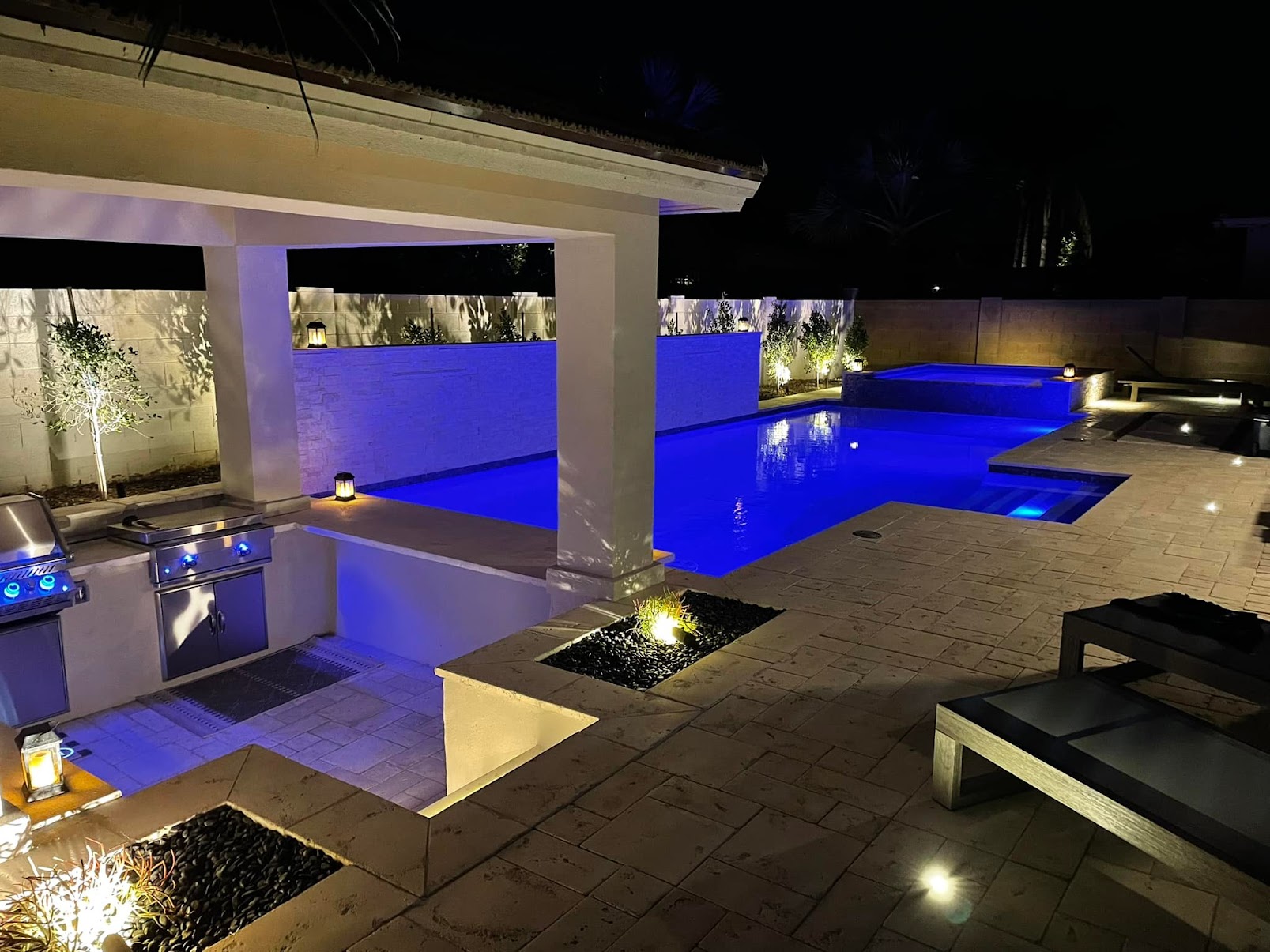
Complete backyard transformation with custom pool spa and outdoor kitchen in Scottsdale
A complete backyard transformation — pool, spa, outdoor kitchen, and landscape all delivered under one plan.

How fast is "too fast"?

A realistic custom pool timeline in our market is usually 4–8 months when you're doing more than just a basic shell — especially if you're adding ramadas, outdoor kitchens, or major grading. Here's what tends to happen when a builder promises 8–10 weeks for a "complete backyard":

  • They're assuming a flat, easy-access lot with no permitting complications
  • They're excluding important features (drainage, lighting, landscape) and letting "others" handle them after the fact
  • They're compressing critical cure times for shotcrete and decking, which can lead to cracking and movement later

Speed isn't bad — but speed without a realistic scope is where homeowners get burned. A dual-licensed GC + pool contractor will talk about the whole project timeline, not just "pool excavation to plaster."

Spec sheets: what's on paper matters

Ask every custom pool company in Phoenix you interview to give you a written spec sheet, not just a rendering. Compare:

  • Steel schedule: bar size, spacing, extra steel in high-stress areas
  • Shell thickness and PSI rating of the shotcrete mix
  • Equipment brands and models — for example, Pentair variable-speed pumps, cartridge or DE filters sized correctly for your pool volume, and automation panels compatible with your home network
  • Interior finish: basic plaster vs upgraded Pebble Technology International pebble or quartz finishes designed for high-UVA environments

If one bid is tens of thousands lower but the shell, steel, and equipment schedule are vague, you're not getting a deal — you're getting fewer materials, less engineering, and more risk.

Who actually manages your job?

On a high-end build in Phoenix, Scottsdale, or Paradise Valley, you want a project manager or superintendent who:

  • Knows how to read structural plans and catch issues before concrete
  • Walks your site regularly, especially at layout, steel, pre-gunite, and pre-deck stages
  • Coordinates trades so plumbing, gas, electrical, hardscape, and landscaping aren't colliding

If you never see your builder after the contract is signed and are left dealing with individual subs, that's a red flag.

➡️ Full custom pool installation process in Scottsdale

Why a GC + Pool License Matters When You Want More Than Just a Pool

If all you're dreaming about is a simple play pool, your risk is lower. But most of the homeowners we work with around Phoenix, Arcadia, North Central, and North Scottsdale want a resort-style environment — which means a lot more than a rectangle of water.

One plan, one license, one accountability

Because we hold both a General Contractor and pool license, we can:

  • Design and build retaining walls, raised decks, and structural site work tied directly into the pool shell
  • Add ramadas, pergolas, and full outdoor kitchens with proper footings, gas, power, and ventilation
  • Integrate landscaping, lighting, and audio so irrigation and roots don't undermine your shell or decking

Instead of piecing together a pool company, a landscaper, a separate masonry contractor, and maybe a handyman to "do the kitchen," everything runs under a single plan and liability umbrella. That's a major difference in both quality and protection for you.

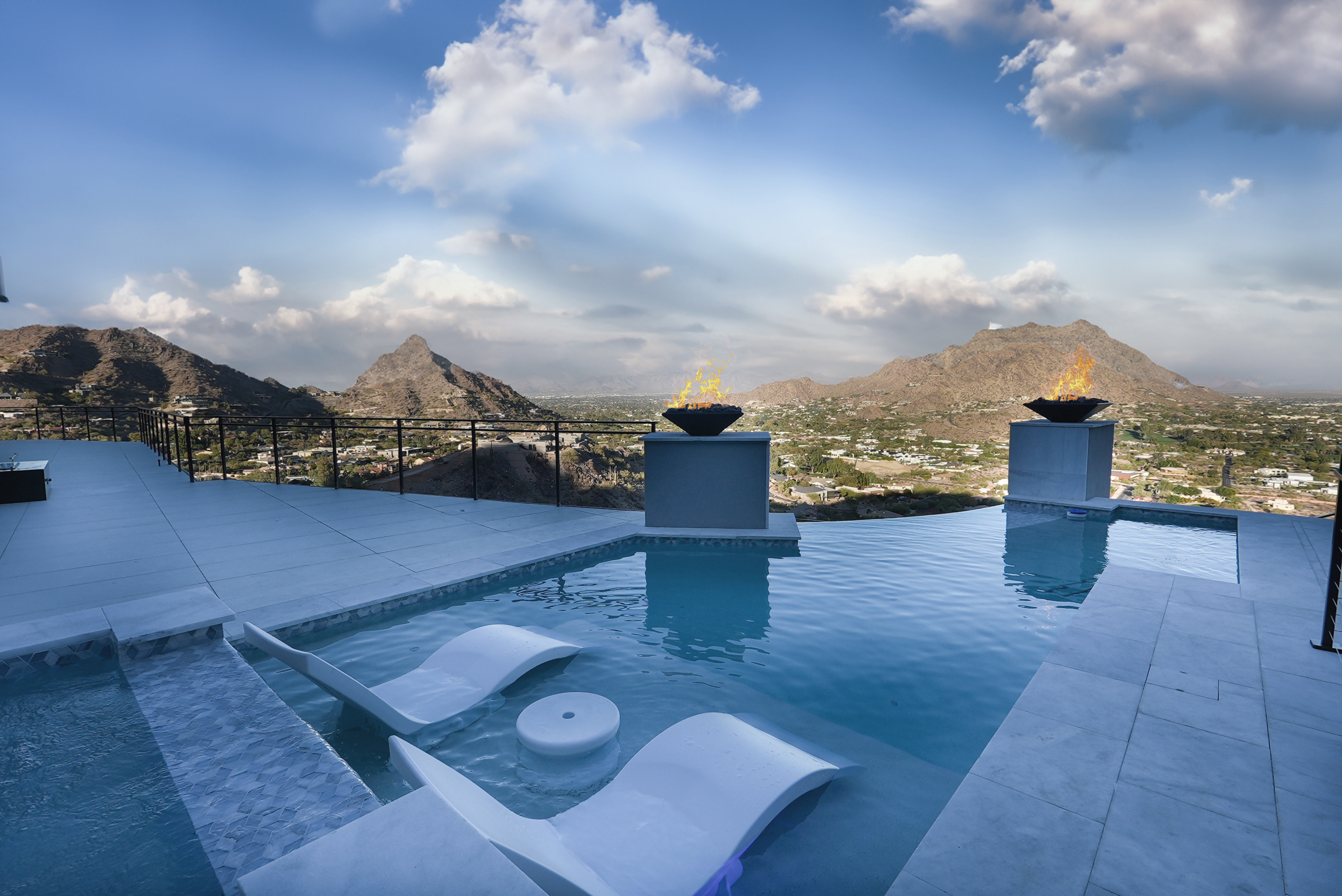
Custom pool with fire bowls and outdoor entertaining area in Paradise Valley estate
Fire bowls, custom pool, and full outdoor entertaining area — all engineered and built under one license.

Where this really matters: complex lots

In hillside communities and view lots — think Paradise Valley, Desert Ridge, Troon, DC Ranch, and parts of Ahwatukee — we routinely see:

  • Multiple elevation changes across a relatively small yard
  • Limited access that requires crane lifts or conveyor systems
  • Existing retaining walls and foundations that must be protected

On these projects, we're not just "digging a pool." We're:

  • Coordinating geotechnical reports and soil testing when needed
  • Engineering micro-piles, grade beams, or stepped footings to tie new work into existing structures
  • Sequencing retaining wall construction before or in conjunction with the shell for proper support

A pool-only builder often has to subcontract or avoid this level of work entirely, which forces awkward compromises in design or leaves you hiring a GC after the fact to fix what should've been coordinated from day one.

Planning a full backyard build? If your property has slopes, existing retaining walls, or you're planning pool, kitchen, fire features, and landscape — call (602) 806-8904 to talk with our team about a master plan instead of piecemeal work.

Practical Checklist for Interviewing Pool Contractors in Phoenix

Use this checklist when you sit down with any pool builder in Phoenix so you're comparing apples to apples.

Licensing, insurance, and experience

Ask:

  • Are you licensed as both a General Contractor and a pool contractor, or pool-only? (Get license numbers and verify them with the ROC.)
  • How many complete backyard builds (not just pools) have you completed in the last 12 months in Phoenix/Scottsdale?
  • Do you carry general liability and workers' comp, and will you name me as an additional insured on request?

Site-specific engineering questions

Ask them directly about your property:

  • What do you expect to encounter in my soils — caliche, expansive clay, existing fill?
  • How will you design drainage so monsoon water moves away from my house and my neighbor's property?
  • If I'm in a hillside or NAOS area, how will that affect design, access, and approvals?

You want specific answers — not "we'll see when we dig."

Design, specs, and scope

Ask for:

  • A full spec sheet listing steel schedule, shell thickness, equipment brands/models, finish, coping, and decking
  • A detailed scope that clearly states what is and is not included: grading, utility trenching, gas and electrical connections, hardscape, landscape, lighting, and fencing
  • A realistic timeline with contingencies for permits, inspections, and weather

If a contractor resists putting these details in writing, that's your sign to keep looking.

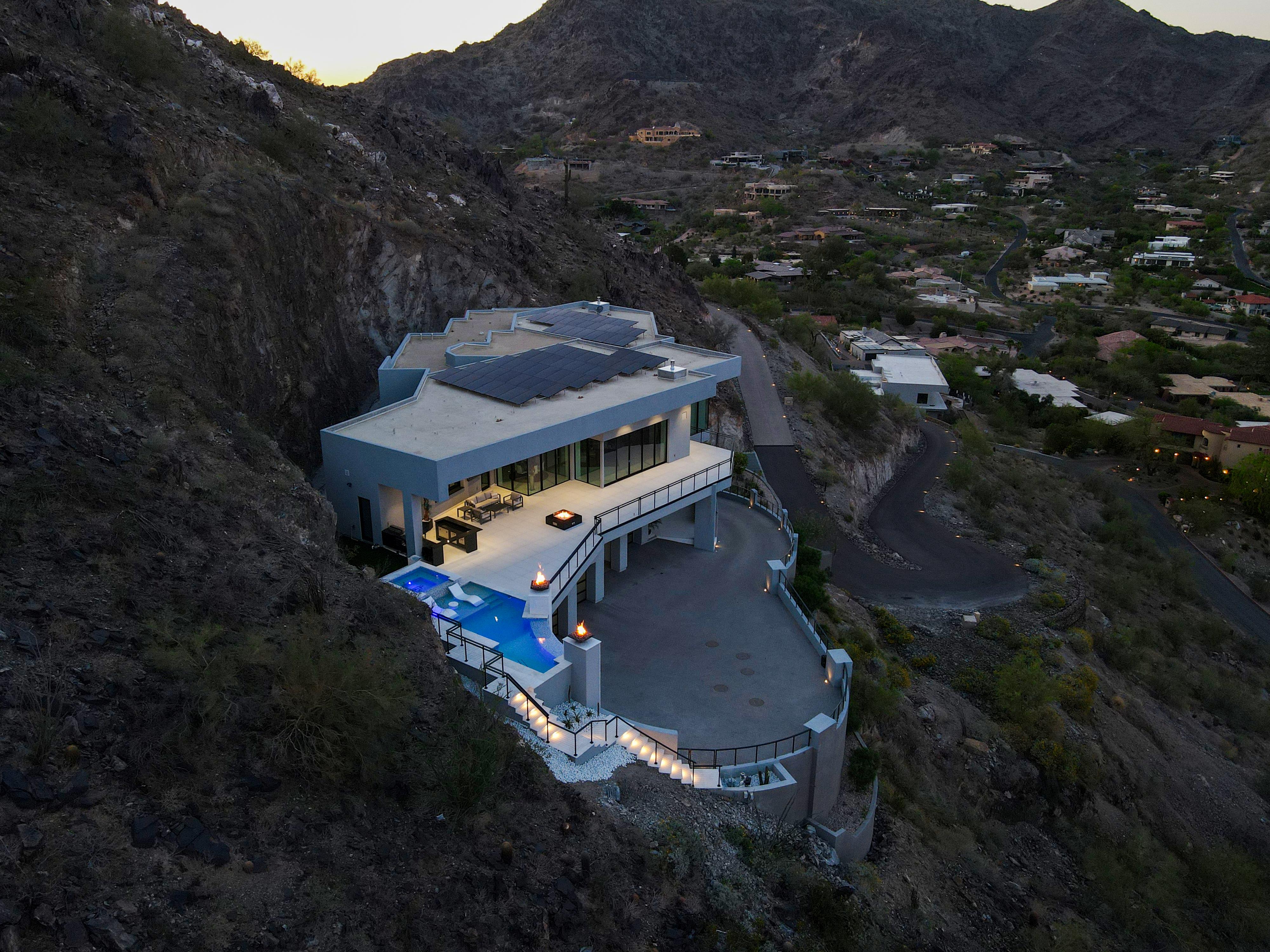
Luxury hillside pool build with city views in Fountain Hills Arizona by Innovative Custom Pools
Hillside pool construction with panoramic city views — the kind of complex build that requires a dual-licensed GC.

FAQ: Pool Contractors in Phoenix

How much does a quality custom pool in Phoenix really cost?

For a mid-range custom pool in Phoenix with integrated spa, upgraded interior finish, basic Baja shelf, and standard decking, most homeowners are typically in the $150,000–$300,000 range depending on size and complexity. When you add ramadas, outdoor kitchens, fire features, and full landscaping, complete projects can run significantly higher — especially on hillside or restricted-access lots.

How long does it actually take to build a custom pool and backyard?

For a standard flat lot with good access, you might see 3–4 months from excavation to first swim if the scope is mostly pool and simple decking. When you include full outdoor living elements — kitchens, shade structures, retaining walls, and landscape — 4–8 months is a more realistic window for high-quality work and proper inspections.

Do I really need a GC, or is a pool-only contractor fine?

If you're installing a simple pool on a flat lot and plan to leave the rest of the yard alone, a pool-only contractor may be sufficient. But if you're modifying grades, adding structures, or dealing with slopes, retaining walls, or NAOS, a dual-licensed GC + pool contractor is almost always the safer route because they can legally manage and warranty the entire project, not just the shell.

What should be non-negotiable in my contract?

Non-negotiables should include: stamped structural engineering, a detailed spec sheet, clear scope of work (including drainage and utilities), payment schedule tied to inspections/milestones, and confirmation of licensing and insurance. You should also see language addressing change orders and unforeseen conditions like caliche or unsuitable fill so there are no surprises when those show up.

How do I know if my yard has special challenges?

Signs include visible slopes, existing retaining walls, step-down patios, or neighbors' yards higher or lower than yours. In North Scottsdale, Paradise Valley, and parts of Phoenix, your title documents may reference hillside overlays or NAOS designations that restrict where and how you can build. A qualified GC + pool contractor will pull your survey, review title docs, and walk the site to identify these issues up front.

Ready to get started? If you're comparing pool contractors in Phoenix and want an honest, engineering-first perspective, reach out to Innovative Custom Pools at (602) 806-8904 or visit icpoolsaz.com to request a site walk. We'll review your lot, discuss your goals, and outline a realistic design, budget, and timeline — no pressure, just straightforward guidance from a dual-licensed GC and pool contractor.